

Investing in a business might not seem like a rosy idea based on the news. But despite the cries of economic difficulties and depressed markets, 80% of small business owners in the UK are surprisingly optimistic and upbeat.
Running a convenience store remains a relatively easy market to get into, whether you’re a first-timer or a veteran business owner. It’s also one of the few niches that’s extremely resilient to challenging times because everyone needs a corner shop they can rely on for those everyday essentials.
But should you choose to go it alone or sign up for a franchise-style shop with a symbol group, like Premier, Londis, Morrisons Daily, or Nisa?
What is a symbol group convenience store?
Symbol groups aren’t pure franchises but a hybrid. Under a symbol group, you gain the right to trade under a well-known, branded banner. However, you still retain ownership of your business. What you get is the right to buy from a central supplier to take advantage of bulk buying power and a massive marketing and branding advantage.
You’re still free to run your store as you see fit. Moreover, if you decide that it’s not working for you or you’d like to switch, you have the right to do so without giving up your business. Pushes by major symbol groups are part of the reason why the UK convenience market is expected to reach a value of £57.7 billion by 2030.
Enquire About a Symbol Group Purchase
Symbol groups in the UK
Several key players dominate symbol corner shops in the UK. They’re different enough to be still distinct, and you can’t really go wrong with any of them. Here’s a breakdown of the main groups:
- Spar – Operates via five regional wholesalers and is one of the most well-known brands in the UK and Europe.
- Premier – The UK’s largest symbol group under the Booker Group, with over 4,000 stores.
- Londis – Boasts over 2,400 stores and is also part of the Booker Group family.
- Nisa – The Co-operative Group owns Nisa and supplies Co-op own-label products to its members.
- Budgens – Yet another Booker Group brand, Budgens focuses on larger shops and forecourt-based shops.
- One Stop – One Stop is owned by Tesco and operates its own stores plus independent retailers through its franchise model.
You’ve also got brands like Costcutter, Morrisons Daily and Bestway/Best-One. The model is effectively the same, but you’ll need to compare them closely to discover where each one excels, and how that fits in with your business plan.
Growth and security in symbol group convenience stores
Independent retailers continue to dominate the corner shop niche, even as major supermarkets have attempted to push into it. Today, 71% of stores are either part of a symbol group or remain unaffiliated. Far from the number of independents falling, we’ve seen more of a shift from unaffiliated to symbol corner shops.
Ultimately, it all comes down to the extra growth opportunities and security that come with being part of a symbol group. In particular, two areas are expanding in the face of the ongoing cost-of-living crisis:
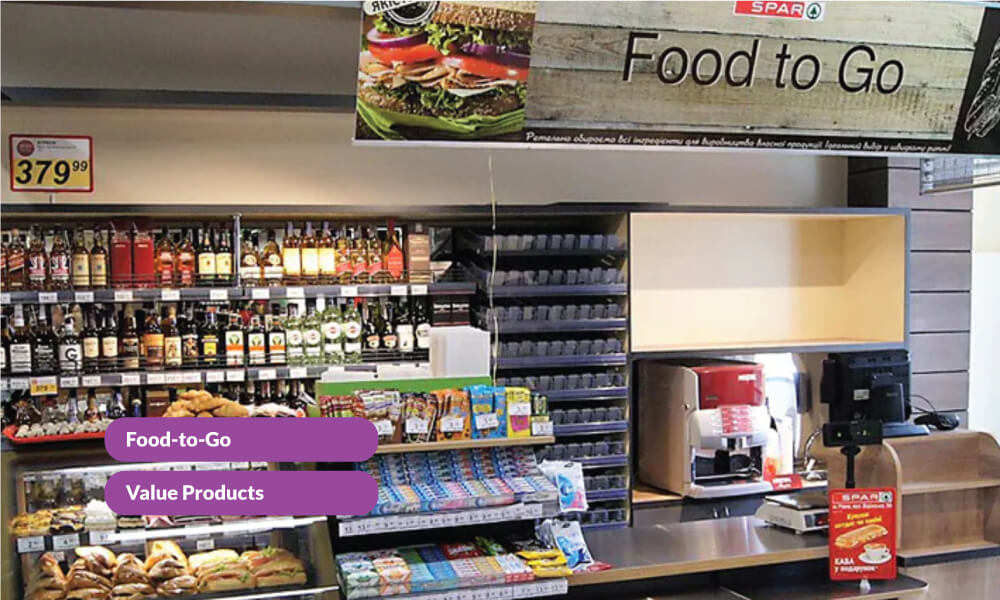
- Food-to-Go – Shoppers are going more towards food-to-go, and symbol groups are taking advantage of that with pre-packaged food ranges and national marketing campaigns.
- Value Products – In the past, shoppers might have shunned own-label, but that’s changing. It’s why we’ve seen Go Local and Spar all increasing their own-label product ranges.
Of course, you can only take advantage of that if you’re part of the relevant symbol group. Trying to do that when you’re unaffiliated is a hassle, even if you’re an experienced operator.
Aside from growth, though, we come to the elephant in the room of security. Losses are rising as theft and aggressive store behaviour increase, reaching a record high of over 530,000 reported incidents in 2025.
Working with a symbol group means you can access security packages, alarm systems, CCTV and shared intelligence networks. It’s also much more affordable because these are group-negotiated plans.
The risks of buying into a symbol group convenience store branch
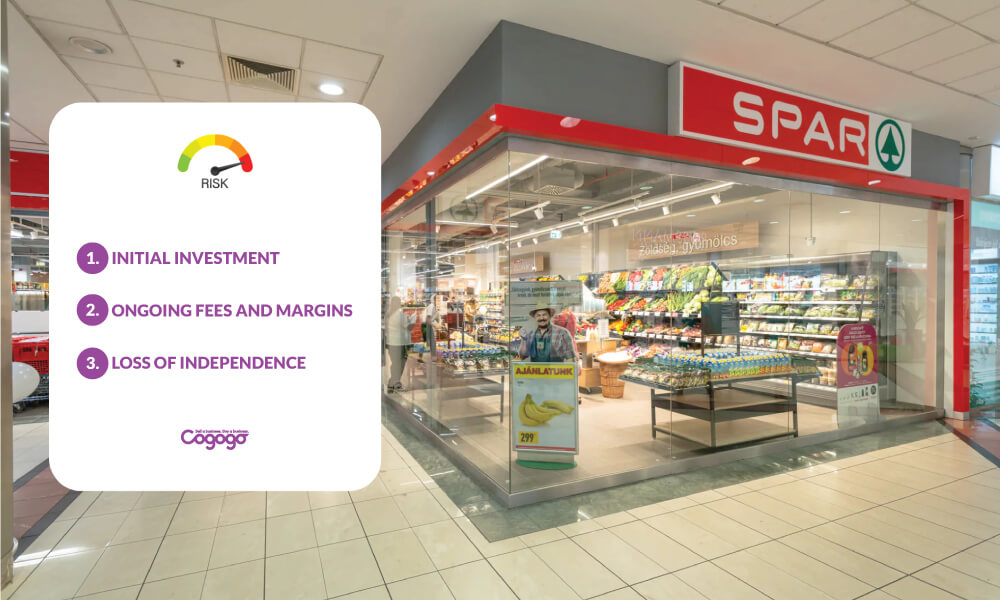
Symbol groups aren’t for everybody. The benefits you get are tempered by the fact that you will have to give up a level of autonomy and pay for the privileges you get.
In short, the primary risks are:
Initial Investment – Most symbol groups will charge a fee for joining the scheme. Furthermore, it’s still common for store investments to be self-funded, especially if you must meet a minimum standard to join a particular group.
Ongoing Fees and Margins – Membership or franchise costs are standard for a symbol group store. Additionally, it’s not uncommon for symbol group products to rank slightly lower when it comes to value for money when compared to non-independent stores.
Loss of Independence – Technically, you can run your business as you see fit. On the other hand, there are still operational standards, store layouts, and some mandatory promotion cycles you’ll have to conform to.
How these risks rank in your eyes really depends on your vision for your business. Also, these risks may be amplified or overstated depending on which group you’re working with.
Some groups operate with a more hands-on or hands-off approach, so you’ll have to do your research first.
Symbol groups vs. independent convenience stores
Should you join a symbol group or be an unaffiliated independent?
There’s no right or wrong answer because it depends on you, your experience, and what you prioritise in how you run your shop.
Symbol Group:
With a symbol group store, you’ve got instant brand trust, bulk buying power to grow your margins, and support for operations and marketing from corporate. What you give up is monthly fees, rules on contracts, and, in some cases, mandatory stock purchasing quotas.
Independent:
An independent store has absolute freedom over everything and doesn’t have to pay any ongoing membership fees. It means they already have a financial advantage every month. They’re also more flexible because they’re not waiting for head office to recognise change.
Of course, you’re not getting those wholesale product discounts or any of the support. It’s also harder to develop that brand trust.
In short, if you’re inexperienced and want some extra support, a symbol store is probably the best solution, whereas if you want maximum profit and control, going independent is the ideal route. In either case, you still retain control of your own business.
With that in mind, if you’re ready to take action, it’s time to see what corner shops for sale are available now. Browse the Cogogo database for the latest businesses for sale and start turning your vision into a reality.


