


Your average corner shop is the location of quite possibly millions of visits during its lifetime. It’s not because it’s a supercharged startup or an emerging industry, but because it’s the pivot of the local community.
Today, there are 50,486 stores across the UK mainland, showing just how important these small shops are from the smallest village to our biggest cities. If you’re thinking about getting into the convenience store business, you might be wondering whether it’s better to get into a franchise or to buy your own.
The answer is more complicated than it seems, so here’s what you need to know.
Your options when buying a franchise vs. independent convenience store
In the past, your only option was starting your own corner shop. These days, an increasing number of established brand names, including Premier, One Stop, and Spar, have given entrepreneurs another option.
In 2025, the market share of independently run shops was 71%, a 4% decrease over the past decade. However, there’s still plenty of room to go around. In a nutshell, a franchise will give you more chances of surviving because you’re getting expert support, whereas an independent shop has a higher profit potential.
It all depends on what you prioritise the most as a business owner. Are you looking for training, brand recognition, and buying power, or do you think complete autonomy and no royalty fees are most important to you?
Again, there’s no right or wrong answer. There’s just a choice.
View Our Convenience Stores for Sale
Buying a franchise vs. an independent convenience store
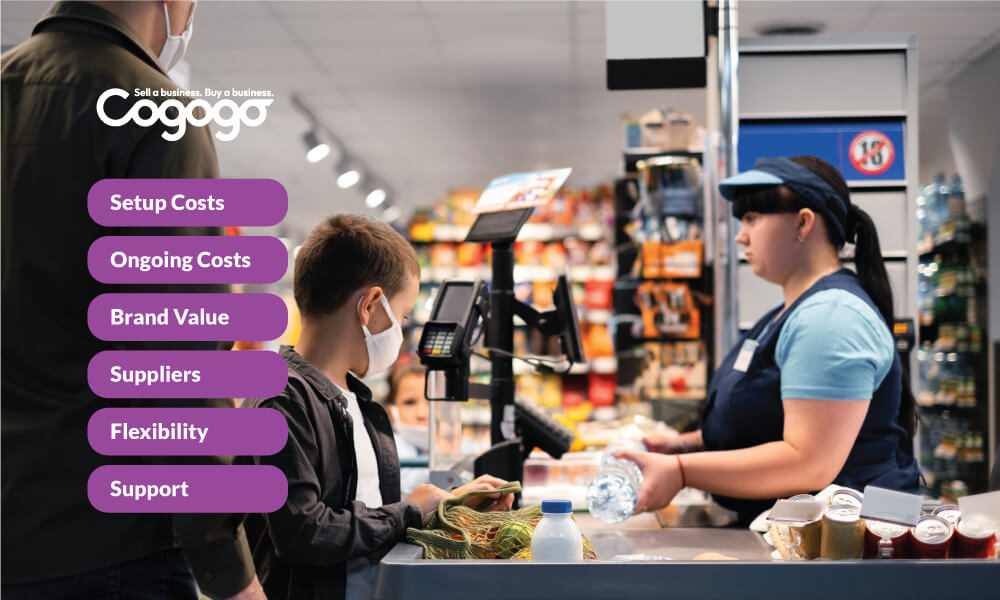
Franchises and independent convenience stores both have their upsides. Likewise, the model slightly differs in terms of the money you’ll have to set aside for costs and the time you’ll have to invest in different areas of your business.
Regardless of the route you take, convenience stores continue to do well, with a 3% rise in convenience stores on the UK’s high streets. In other words, you’re finding more and more of them thriving in city centres now.
With that in mind, here’s a direct comparison of the benefits of both:
- Setup Costs – Franchises typically require a higher initial investment because you’re not just paying for the shop setup, but also a minimum amount to cover investment fees. Franchise buy-ins can cost anywhere from £10k to £50k, depending on the brand.
- Ongoing Costs – Independent stores usually have higher buying costs for stock, but this is tempered by the fact that franchises usually charge between 5-10% of your revenue (not your profits). Learn more about the cost of being a convenience store
- Brand Value – Franchises already have an established brand, meaning you’re spending less time on marketing yourself. In contrast, independent shop owners have to start from scratch to win customer trust.
- Suppliers – One of the big benefits of franchises is that suppliers are usually centralised, allowing for cheap bulk buying. Running your own shop means you’ll have to source independently, and you usually won’t get the same discounts.
- Flexibility – Franchises run off a single business model, reducing your operational control. On the other hand, independent store owners can operate however they like.
- Support – Newer entrepreneurs often favour franchises because of the level of support they get. Get into a franchise, and you’ll get dedicated training and expert support, whereas independents must work everything out for themselves.In many cases, the choice depends on how much support you’re going to need and how much risk you want to take on. For many entrepreneurs, lower profit potential and higher buy-ins are worth the support network around them.
Moreover, some entrepreneurs will start with franchises and then move into starting their own shops when they feel more confident in running this type of business.
Risks specific to corner shop franchises
The protection of a franchise isn’t a guarantee against failure. Approximately 46% of insolvencies in 2024 were startups. In other words, corner shop franchises come with risks that must be factored into your next move.
These risks include:
- High costs of ongoing royalties, which are based on revenues, not profits.
- Intense competition from stores that are part of the same franchise.
- Operational constraints prevent you from adapting to local demand.
- Inability to shop around for better prices because of supply chain limitations.
- Your future is based on the franchisor’s financial stability, so if they fail, your shop could go with them.
It’s also vital to remember that franchisors aren’t making their decisions based on your shop’s performance.
They’re looking at the franchise as a whole, so you might wake up one day to find that you’ve been forced to switch suppliers or implement an unpopular product line just because it’s best for the majority, rather than your shop in particular.
For more information about the convenience store market in 2026, check out our dedicated blog post.
Risks specific to independent corner shops
Independent corner shops aren’t worrying about regular franchise fees, but they also have a much narrower margin for error. Examples of the risks you must be aware of include:
- Your shop will get zero support, forcing you to chop and change in the hopes of success.
- There’s no brand recognition, so you’ll be starting from scratch.
- Independent stores are facing more competition from big supermarkets and well-known franchises.
- You don’t benefit from centralised bulk purchasing, meaning you’re forced to shop around and negotiate your own agreements.
- No training options, meaning you’ll need to manage the entire setup yourself.
The profit potential is typically larger with an independent shop, with more flexibility to adapt to your customers and the nuances of your local area. The downside is that you’re entirely on your own, hence why beginners often go the franchise route.
Is a franchise or an independent convenience store more profitable?
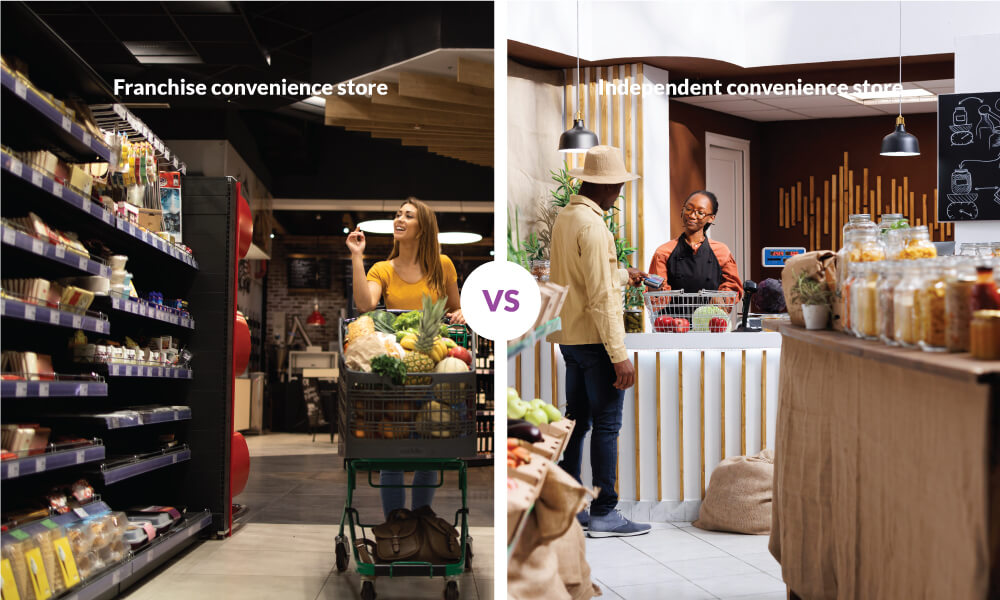
Measured by pure profit potential, independent convenience stores win every single time. Regardless of the success of a franchise corner shop, you’ll always have to make regular monthly payments in royalty fees.
But despite the squeeze on your margins, franchise stores are typically more consistent in their profitability, and you’re more likely to turn a profit faster because of the brand recognition and support. You also have the benefits of group purchasing power, which means your supplier costs will likely be lower from the start.
The choice is largely a matter of how ambitious you are and how confident you are in your ability to run this type of business. If you’re ready to start your own corner shop, there are plenty of existing businesses for sale to help you skip that awkward startup phase.
Start your search for corner shops for sale by browsing the Cogogo database of vetted businesses in your area now. Or, find out more about buying a convenience store by getting in touch with us.


